
Back to school time in RO
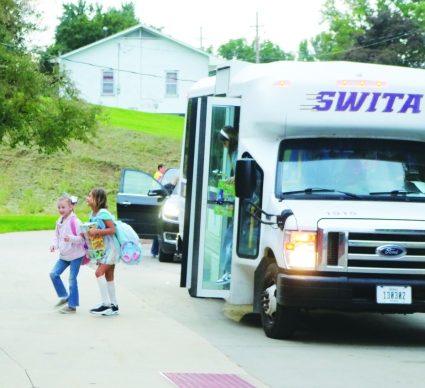
Students in the Red Oak District went back to school on Aug. 24.
This included the students at Red Oak Elementary. The building has been undergoing renovations over the summer, and Red Oak superintendent Ron Lorenz said the project reached substantial completion, though special steps had to be taken to cool the building due to the HVAC project still being underway.
“The new HVAC system is not yet operational, so we arranged to have portable cooling units and fans in place at Inman on Monday morning. Fortunately, temperatures remained in the mid-to-upper 70s over the past few days and were manageable the first week of school. Some classrooms have been a little stuffy, but conditions have remained manageable and have not interfered with teaching and learning,” Lorenz said.
Lorenz said that HVAC project remains the biggest hurdle for the project now that school is back in session.
“Our greatest remaining challenge is getting the new HVAC system fully operational. During startup, a soldered connection failed on a refrigerant line, causing a pressure release that damaged a portion of the piping and discharged the system’s refrigerant. Fortunately, no one was injured. The contractor is replacing the damaged components and will then clean, evacuate, pressure-test, and recharge the system. Sometimes you have to take one step backward before taking two steps forward,” Lorenz commented. “Although this is an unfortunate setback, we originally did not expect the new system to be installed until next month because of anticipated manufacturing and shipping delays, so we remain well ahead of schedule. We may have hit a bump in the road, but we are still ahead of the traffic.”
Also, Lorenz said the timing of the HVAC issue was fortuitous, as it happened before school was in session.
“The system operates under about 200 pounds of pressure, and a soldered connection failed to hold that pressure and popped. People heard the noise and saw refrigerant escaping, which looked like smoke and understandably caused some alarm. Fortunately, the incident happened before school. The equipment is also located on the roof, away from students and staff, so no one inside the building was in danger. No one was injured, but the failure does require the contractor to make the repair and thoroughly clean, test, and recharge the system before restarting it. The HVAC system was expected to be up and running as of Aug. 27,” said Lorenz.
Overall, Lorenz said the project has been running smoothly and the delays have been dealt with. He also added that the project has not seen massive delays due to a lack of materials.
“For the most part, materials have arrived on time. The biggest challenges have involved a few special-order items. We were initially told the new HVAC unit could take 16 weeks to manufacture and ship, but thankfully it arrived sooner than expected and is nearly installed,” said Lorenz. “We also had to wait for the front doors, which required precision machining to accommodate the security hardware. They did not arrive until the middle of last week, but Red Oak Glass made a herculean effort to install them much faster than expected. Aside from a few minor delays here and there, supply issues have not significantly affected the project.”
Lorenz added there were three primary goals for the project: create a secure 180-square-foot entrance, expand the cafeteria by approximately 1,200 square feet, and add roughly 800 square feet to the office while reconfiguring the existing office area.
The project’s top priority was the addition of a secure entrance. This addition gives staff much better visibility and control over who enters the building by directing visitors into the office before they can access the rest of the school. In today’s world, this is not just a nice feature; it is an essential safeguard for students and staff that brings Inman in line with current school-safety practices.
While safety was the foremost priority, Inman also had a cafeteria that had simply become too small for the number of students using it.
“Overcrowding made supervision and movement more difficult, shortened the time students had to eat, and sometimes disrupted the transition back to class. The expansion provides a calmer, more orderly environment where students have enough room and time to eat. It also gives the school a flexible space for programs, meetings, and community activities. As the old saying goes, ‘You can’t put ten pounds of potatoes in a five-pound sack. We had stretched the former cafeteria about as far as it could go,” commented Lorenz.
Much like the cafeteria, the office had also outgrown its existing space and layout. Its location limited visibility, made visitor check-in less efficient, and didn’t provide enough privacy for counseling, health services, and sensitive conversations with students and families.
“The addition and reconfiguration created a more welcoming and professional front office while improving security, staff efficiency, and student support. Sometimes it is not just about having more space, it’s about making that space work harder and smarter. Making the most of our existing resources was also central to how we financed the project. We wanted to complete these improvements without placing an additional burden on taxpayers. The project was funded with PPEL and SAVE dollars that the district had strategically saved for facility improvements, along with more than $327,000 in interest earned by investing those reserves. These funds are legally restricted to infrastructure and related purposes and cannot be used for general operating expenses,” Lorenz stated. “We did this the old-fashioned way: we saved, invested wisely, and lived within our means, so the project did not require any sort of tax increase. We originally budgeted $3.3 million plus an additional $500,000 for a new HVAC system, and I am pleased to say we are currently well below that amount.”
Beyond the HVAC system and automatic door operators, Lorenz said most of what remains is the construction equivalent of “buttoning things up.” This includes completing a small section of cafeteria flooring and base, restoring the PA system and clocks, installing replacement acoustic panels, finishing the landscaping and exterior decorative panels, and taking care of some trim, flashing, painting, patching, and cleanup. Contractors also need to adjust a few doors, address several cosmetic blemishes, install the flagpole light and project plaque, and resolve issues with a couple of damaged cafeteria tables.
“The punch-list walkthrough confirmed that the project has reached substantial completion, and the renovated areas are approved for use under a temporary certificate of occupancy. Overall, the group was pleased with the condition and appearance of the space. We will walk through the building again in about a week to ensure the remaining details have been addressed before authorizing final payment.”
Now that the project is nearing completion, Lorenz said if they could do anything differently, they would allow more time for unexpected delays.
“Despite those delays, our timeline was intentionally tight so we could complete as much work as possible over the summer and minimize disruptions to school. Extending the schedule would have meant major construction around students and staff, creating concerns with safety, noise, access, and daily operations. The missing door operators and late HVAC setback demonstrate how a small oversight can affect even the most well-planned and closely monitored project. Our project superintendent often characterized construction as “orchestrated chaos,” and now I understand exactly what he meant. With so many contractors, suppliers, schedules, weather delays, and moving parts to coordinate, frequent communication, careful oversight, and flexibility are essential. I think we handled those responsibilities well, but there is always room to improve. The key is to identify problems quickly, make sound decisions, and keep moving forward,” stated Lorenz. “The project also reinforced the value of sound financial planning. Because the district saved, invested wisely, and maintained an appropriate contingency, we could address unexpected challenges without compromising the project or asking taxpayers for additional support. You can’t eliminate every bump in the road, but you can make sure you have the resources and the good sense to navigate them.”
Lorenz also said that students seem genuinely impressed with the new cafeteria and office area. “From an adult perspective, the expanded cafeteria already feels less crowded and chaotic, which has been a godsend for staff. The redesigned office is more spacious, inviting, and efficient, allowing staff to serve students and families more effectively. Once it’s fully operational, the secure entrance will significantly enhance safety by allowing us to better monitor and control access to the building.”