
USDA approves loan for new wastewater plant
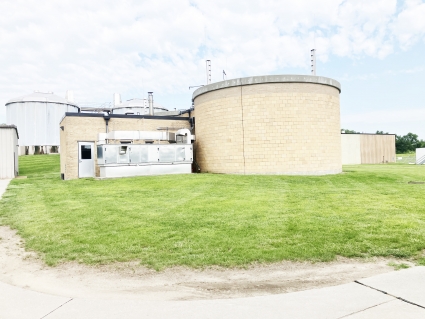
Plans for updating the wastewater treatment plant in Red Oak can now move forward.
Recently, the announcement was made that the U.S. Department of Agriculture (USDA) will provide $20,180,000 in federal funds to the City of Red Oak to build a new treatment system to replace the aged facility and help the city maintain compliance with water quality standards. The project will also update a lift station and line a large portion of the collection system to decrease infiltration and inflow.
City administrator Lisa Kotter said the city’s existing plant, which has been in operation for a long time, is in need of a boost.
“It’s lived its useful life after many decades. When it comes to the plant, there’s often things that we’re having to keep upgrading. Obviously when you’re dealing with the kinds of waste that we’re dealing with, it’s hard on equipment, much more so than treating regular drinking water,” Kotter said. “There’s so much waste and there different things regarding treatment that come into it. It’s hard on the systems, the pumps, the lagoons, and other things like that.”
In addition to the wear and tear on the equipment, the fact that some of the equipment is beyond its lifespan makes it hard to keep up with regulations.
“The DNR will continue to add expectations of treatment, so ultimately all the waste that comes from people’s houses and businesses in the community that are on the sanitary sewer system all go down to the wastewater plant, and it’s time for us to do an upgrade,” commented Kotter.
Kotter also said that doing an upgrade to the plant will not be an inexpensive project.
“Unfortunately, wastewater plants are extremely expensive just because of the severity of the type of work that it is. The estimates right now are at $20 million. The loan that was approved was basically $20 million and some change from the USDA. By going through the USDA rather than another source, the benefit to that is getting a lower interest rate than market rates. We will be able to utilize that,” advised Kotter.
While the funding is a guarantee, Kotter said the city will still have to do some legwork as it’s not immediately available.
“We have to do interim financing. The USDA doesn’t pay out that loan until the project is done. It’s not like a construction loan where you can keep drawing on it, so we’ll have to come up with some other source of funding. Then that funding gets repaid as soon as the project is done,” Kotter said. “The preliminary amount we borrow has to be pretty significant because I’m sure we’ll have to make monthly payments to whoever gets the bid. The contractor is likely not going to hold off on getting paid while it waits for the project to be completed and we get the funding from the USDA.”
With the funding portion of the project, for the most part, secured, Kotter outlined the next steps for the project.
“We are in the process right now of designing it, going through different phases with the Iowa DNR. The DNR obviously has to approve it. The phases include when planning is 30%, 60%, and 90% done. Our designers keep checking in with the DNR, and we’re in those phases. Snyder and Associates out of Atlantic is the engineering firm that’s assisting us with that and is under contract to the city. At this point, I think that the expectation is that it would be a project that was underway in 2027, or 2028,” explained Kotter.
Kotter also said that seeking out the funding from the USDA seemed like the obvious choice, but it is a complicated process.
“The USDA is a pretty common entity to borrow from with these big loan programs that can be beneficial for a lot of wastewater plants. Some of that stuff was in the works before my time, like the design of the wastewater plan and the decision to proceed with the USDA. There’s a whole online portal that you have to upload a lot of documentation, a lot of financials and you work with the USDA office staff. The staff person that we deal with is in Atlantic. When you get all that uploaded they have a big vetting process of making sure that they’re confident that the city can pay that loan back.”
To pay the loan back, Kotter said the city will have to do so through the sewer rates.
“We will have to review the sewer rates, and I’m guessing there will be a pretty significant increase in sewer rates to be able to pay for that. Unfortunately, we don’t have much choice,” Kotter said.
Additionally, the completion of the project will reduce costs to the city in other areas.
“It’s definitely going to reduce the costs for maintenance. Obviously, certain pieces of equipment in the plant are getting old right now. There’s a lot of things breaking on a regular basis, so we try to kind of “band-aid” those knowing that it’s a short term fix. Also, once the upgrade is completed, any sort of future regulations that are coming down the pike from the DNR, we will know that we have the equipment to be able to satisfy the DNR requirements for discharge,” Kotter advised. “All the waste comes in, and then the ultimate goal is to send it out to the river in a clean status that meets the requirements of the DNR, nd of course we have to test all our effluent before it goes out.”
While the plant will be upgraded, Kotter said there won’t have to be any major changes to staffing and training.
“We should still be a grade three plant, and right now, we have a grade three operator, Clint Roland. Eventually we would plan to have another grade three operator, but as of right now, we would still be compliant with the existing plant and the incoming new plant. We would be compliant with our current grade operators,” stated Kotter.
While the cost is large, Kotter said there will be some elements of relief with operating with new equipment.
“Once the project is done and online, I’m sure that there will be happiness that we’re going to be compliant, glad that we could get it done, and glad that we have the ability to finance it through a lower interest rate than we would if we just had to go out to market,” commented Kotter. “Obviously, there’s the downside of knowing that it’s a significant investment on behalf of the community and that people’s financial status aren’t always great and it could become a burden for the taxpayers. That weighs on people, and we don’t take those things lightly. Nobody desires to raise those rates, but you really don’t have a choice with that kind of debt.”
Determining the rates will also be a process, and Kotter said that it may use a staggered approach.
“There will have to be a financial analysis on what the rates have to look like based on the debt that will come once we’re done with the plant. It’s a 40 year loan. Once we have the financial analysis complete, then we’ll be starting the conversation with the council. Hopefully, it can be a graduated approach where it’s in two phases, one increase later on this year, and then a second, final increase later on so it’s somewhat gradual The first increase will definitely have to be before the end of the calendar year,” explained Kotter.
She added that the city was out of options, as the band aid approach was no longer working in regards to keeping the plant operating.
“Even since I’ve been here, we’ve spent a significant amount of money just trying to fix things and making sure that the plant is keeping up. Beyond those costs, it’s a significant penalty to a community if it’s determined you discharged things that are not allowed. If you don’t have a plant that’s working on all cylinders, you run that risk. Also, we had a recent storm and the plant was hit by lightning. Significant damage was done to the electronics that talk to each other so we’re working with insurance on that. We can’t have a plant that is not compliant, it’s just not an option,” said Kotter.”
More conversation and discussion on the plant and the effect on wastewater rates will take place during future city council meetings.